Learn 7 things to know about allulose, including calories, blood sugar effects, safety, how it compares with sugar and other sweeteners, and how to use allulose as a sugar substitute.

Sugar does more than make food sweet. It also affects texture, moisture and browning, which is why replacing it is not always straightforward. This guide looks at where allulose may fit, what human studies say about blood sugar, and which claims still need stronger evidence.
Last updated: 28 August 2026
AI Overview Summary
Article summary
Allulose is a low-calorie rare sugar that tastes more like regular sugar than many high-intensity sweeteners. Human research suggests it has a much smaller effect on blood glucose and may help moderate post-meal glucose responses when consumed with carbohydrates.
1
About 90% fewer calories
Under current U.S. FDA guidance, allulose can be calculated at about 0.4 kcal per gram compared with about 4 kcal per gram for regular sugar.
2
More sugar-like
Allulose is about 70% as sweet as sugar and can provide sweetness, moisture, body and browning in foods.
3
Smaller glucose effect
Controlled human studies suggest allulose has little effect on blood glucose itself and may moderate the post-meal rise when eaten with carbohydrates.
4
Long-term claims are less certain
Current evidence does not show that allulose treats diabetes, reliably lowers HbA1c long term or improves exercise recovery in humans.
1. What Is Allulose and Why Is It Different From Sugar?

Allulose, also known as D-allulose, is a rare sugar found naturally in small amounts in foods such as figs and raisins. It has a structure similar to fructose, but the body handles it differently from regular sugar. Much of the allulose that is absorbed is eventually excreted without being fully metabolised.
This is why allulose can provide sweetness with far fewer calories. Under current U.S. FDA guidance, regular sugar provides about 4 kcal per gram, while allulose can be calculated at about 0.4 kcal per gram.[1]
Regular sugar4 kcal/g
Allulose0.4 kcal/g
Simple takeaway: Allulose tastes like sugar but provides roughly 90% fewer calories per gram because the body metabolises it differently.
2. Allulose Tastes and Cooks More Like Regular Sugar

Many sugar substitutes taste or behave differently from regular sugar. Stevia and monk fruit, for example, are much sweeter and only need to be used in very small amounts.
Allulose is around 70% as sweet as regular sugar and can still contribute sweetness, body, moisture and browning. This makes it useful in coffee and tea, yoghurt, sauces, drinks, desserts and baked foods.
Kitchen tip: Allulose can brown faster than regular sugar, so baking temperature or timing may sometimes need adjusting.
3. Does Allulose Raise Blood Sugar?

This is one of the main reasons allulose has attracted attention. When you eat regular sugar or other carbohydrates, blood glucose usually rises after the meal. Allulose has only a small effect on blood glucose by itself.
Research also suggests that when allulose is consumed with carbohydrates, it may help moderate the rise in blood glucose after eating.
What the latest review found: A 2026 systematic review and meta-analysis in The American Journal of Clinical Nutrition found that allulose significantly reduced post-meal blood glucose responses across controlled human studies. The effect was especially consistent when allulose was consumed with a meal.[2]
This does not mean allulose completely prevents blood sugar from rising. The overall meal, especially the amount and type of carbohydrate, still matters.
4. What Do Human Studies Say About Allulose and Blood Sugar?

Some human studies help show how large the effect may be.
- 24 adults with type 2 diabetes: a 10 g allulose condition was associated with about an 8% lower overall post-meal glucose response compared with control.
- 14 adults without diabetes: consuming 15 g allulose with 30 g sucrose was associated with approximately 24% lower overall glucose response and 33% lower overall insulin response versus sucrose alone.[4]
Keep the result in context: These were short-term studies looking at responses after eating. They do not mean allulose treats diabetes or permanently lowers blood sugar.
5. Can Allulose Improve Long-Term Blood Sugar Control?

The short-term research on post-meal glucose is promising, but long-term results are less certain.
The 2026 review did not find a significant overall improvement in HbA1c, fasting blood glucose, fasting insulin, blood lipids or body composition after longer-term allulose use.[2]
One eight-week pilot study involving people with type 2 diabetes reported improvements in several measures, but participants consumed a complete nutrition formula containing several ingredients, not allulose alone. Because there was no matching allulose-free control group, the improvements cannot be attributed to allulose alone.
Simple takeaway: Allulose currently has stronger evidence for helping moderate blood sugar after eating than for improving long-term diabetes control.
6. Can Allulose Replace Regular Sugar?

For most people, this may be the most practical question. Instead of asking “Should I add allulose to my diet?”, a better question is “Can I use allulose instead of some of the sugar I already eat?”
If you regularly add sugar to coffee, yoghurt, drinks, sauces or homemade desserts, replacing some of it with allulose may help reduce added sugar, calories from sugar and the blood glucose impact of the sweetener.
Practical approach: Because allulose is less sweet than regular sugar, some people combine it with a smaller amount of sugar or another sweetener. Gradual replacement may be easier to maintain than trying to go completely sugar-free.
7. What Other Allulose Benefits Are Being Studied?

You may have seen claims that allulose can increase GLP-1, control appetite, burn fat, improve exercise endurance or speed up exercise recovery.
There is research looking into these areas. However, much of it comes from animal or laboratory studies, not large human clinical trials. Animal research has explored GLP-1, appetite, energy use, glycogen, endurance and recovery.
Evidence check: These findings are interesting, but they are not enough to say that allulose produces the same benefits in people. For now, they are better viewed as potential benefits still being studied.
Allulose vs Sugar, Stevia, Monk Fruit and Erythritol

There is no perfect sweetener for every situation. Allulose may appeal to people who want something that feels closer to regular sugar while contributing far fewer calories.
Quick guide: If taste and baking behaviour matter most, allulose is one of the closer alternatives to regular sugar. High-intensity sweeteners such as stevia and monk fruit work very differently.
| Sweetener |
Sweetness |
Calories |
Blood sugar effect |
Main feature |
| Allulose |
About 70% as sweet as sugar |
Very low |
Very small |
More sugar-like taste and cooking properties |
| Stevia |
Much sweeter |
Minimal |
Minimal |
Very small amounts needed |
| Monk fruit |
Much sweeter |
Minimal |
Minimal |
Often used in blends |
| Erythritol |
Slightly less sweet than sugar |
Very low |
Minimal |
May have a cooling taste |
| Regular sugar |
Standard sweetness |
About 4 kcal/g |
Raises blood glucose |
Familiar taste and texture |
Who May Find Allulose Useful?

Allulose may be worth considering if you are trying to reduce added sugar, watch your blood glucose, want a lower-calorie sweetener, enjoy cooking or baking, or dislike the taste of some high-intensity sweeteners.
Keep the whole food in mind: Changing the sweetener does not automatically make the entire food healthier. A cake made with allulose may contain less sugar, but it can still contain refined flour, fat and calories.
Is Allulose Safe?

Allulose has been reviewed for use as a food ingredient in several markets. The U.S. FDA allows manufacturers to calculate allulose at approximately 0.4 kcal per gram under its current labelling guidance.[1] In Singapore, allulose is listed by the Singapore Food Agency under carbohydrates and saccharides.[3]
Digestive tolerance: Larger amounts may cause bloating, gas, stomach discomfort or loose stools in some people. If you are new to allulose, starting with a smaller amount may be more comfortable.
What If You Have Diabetes?

Allulose has been studied in people with type 2 diabetes, and current research suggests it has a much smaller effect on blood glucose than regular sugar.[2]
It may therefore be useful for people trying to reduce conventional sugar. However, allulose is not a diabetes treatment. Blood sugar is also affected by the rest of your meal, total carbohydrate intake, medication, physical activity and your individual response to food.
If you use insulin or glucose-lowering medication: speak with your healthcare professional before making major dietary changes.
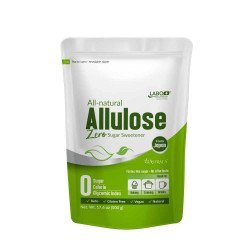
LABO Nutrition ASTRAEA Allulose: A Practical Sugar Substitute

If you want to reduce regular sugar without giving up sweetness, LABO Nutrition ASTRAEA Allulose offers a simple alternative for everyday use.
100% Natural AlluloseEveryday Sugar Substitute
LABO Nutrition ASTRAEA Allulose
A lower-calorie sweetener with a clean, sugar-like taste and texture.
~70%sweetness of regular sugar
~1/10of regular sugar calories
- About 70% of the sweetness of regular sugar
- Roughly one-tenth of the calories of regular sugar
- Suitable for coffee, tea, drinks, cooking, desserts and baking
- Produced using a proprietary enzymatic process developed in collaboration with Kagawa University
- Product information states the ingredient has attained FDA GRAS status
Practical use: Replace some of the regular sugar you already use rather than adding more sweetness to your diet.
Explore LABO Nutrition ASTRAEA Allulose →
Final Takeaway

If you enjoy sweet foods but want to eat less regular sugar, allulose may offer a useful middle ground. It tastes similar to sugar, contains far fewer calories, has a much smaller effect on blood glucose and can be used in drinks, cooking and baking.
Human research also suggests it may help moderate the post-meal glucose response when eaten with carbohydrates. However, current evidence does not show that allulose treats diabetes, reliably lowers HbA1c long term, causes weight loss by itself, burns fat or improves exercise recovery in humans.
In short: Think of allulose as a possible way to replace some of the regular sugar you already use, not as a health supplement you need to add to your diet.
Frequently Asked Questions
What is allulose?
Allulose is a rare sugar that naturally occurs in small amounts in certain foods. It tastes similar to regular sugar but provides far fewer calories.
Does allulose raise blood sugar?
Allulose has a much smaller effect on blood glucose than regular sugar.
Can allulose reduce blood sugar spikes?
Human research suggests that allulose may help reduce the rise in blood glucose after a carbohydrate-containing meal. It does not completely prevent blood sugar from rising.
Is allulose suitable for people watching their blood sugar?
It may be a useful alternative to regular sugar because of its small effect on blood glucose. The rest of the meal and overall diet still matter.
Is allulose artificial?
No. Allulose occurs naturally in small amounts in certain foods, although commercial allulose can also be produced for use as a food ingredient.
How sweet is allulose?
Allulose is approximately 70% as sweet as regular sugar.
Can I use allulose in coffee?
Yes. Allulose can be used to sweeten coffee, tea and other drinks.
Can allulose be used for baking?
Yes. It can provide sweetness, moisture and browning, although it may brown faster than regular sugar.
Does allulose help with weight loss?
Replacing higher-calorie sugar with allulose can reduce calories from sweeteners, but allulose itself has not been proven to cause meaningful weight loss in humans.[2]
Does allulose improve exercise recovery?
There is not enough human evidence to support this claim. Most positive findings so far come from animal research.
Can allulose upset your stomach?
Large amounts may cause bloating, gas or loose stools in some people.
Disclaimer
Disclaimer: This article is for general health education only and is not intended to diagnose, treat, cure or prevent any disease. Allulose should not replace prescribed medication, professional medical advice or a balanced diet. If you have diabetes, take glucose-lowering medication or have another medical condition, speak with a healthcare professional before making significant dietary changes.
References