






This offer ends in:




Research proven health benefits of SunfiberTM:
The following are extracted from published clinical studies, in-house studies, and/or case studies and are for reference purposes only. This does not imply that the product from Lifestream Group Pte Ltd is claimed to replicate the same results produced in the studies. This information is not a substitute for professional medical advice, diagnosis, or treatment. If you have any questions about a medical condition, please consult your physician or other qualified healthcare providers. Any statements or claims made have not been evaluated by the relevant regulatory bodies and are not intended to diagnose, treat, cure, or prevent any disease.
By using the Site, you agree that you have read and acknowledge the above and the Terms of Use for this Site.
1) Gastrointestinal health
Sunfiber™ or partially hydrolyzed guar gum (PHGG) is a water-soluble dietary fiber that helps relieve abdominal discomforts, improve bowel movement, and support gastrointestinal health by modulating gut microbiota. It is important to note that Health Canada has approved health claims for effectiveness of Sunfiber™ in mitigating symptoms of irritable bowel syndrome (IBS) and relieve intestinal issues related to childhood constipation.
Study 1:
In this clinical trial, 44 healthy volunteers (average 41.9 ± 6.3 years old) with a tendency toward diarrhoea, particularly irritable bowel syndrome diarrhoea (IBS-D)-like symptoms, were orally administered Sunfiber™ at 5g/day for 3 months. This resulted in significant improvement in stool form, as evaluated using Bristol stool scale (BSS). In BSS, types 1 and 2 indicate constipation, types 3 and 4 are considered healthy stool, while types 5 to 7 indicate diarrhoea. In addition, there were significant changes in the ratio of some bacteria, including an increase in the number of beneficial Bifidobacterium. These findings suggest that Sunfiber™ helps improve stool form by regulating gut flora.

Study 2:
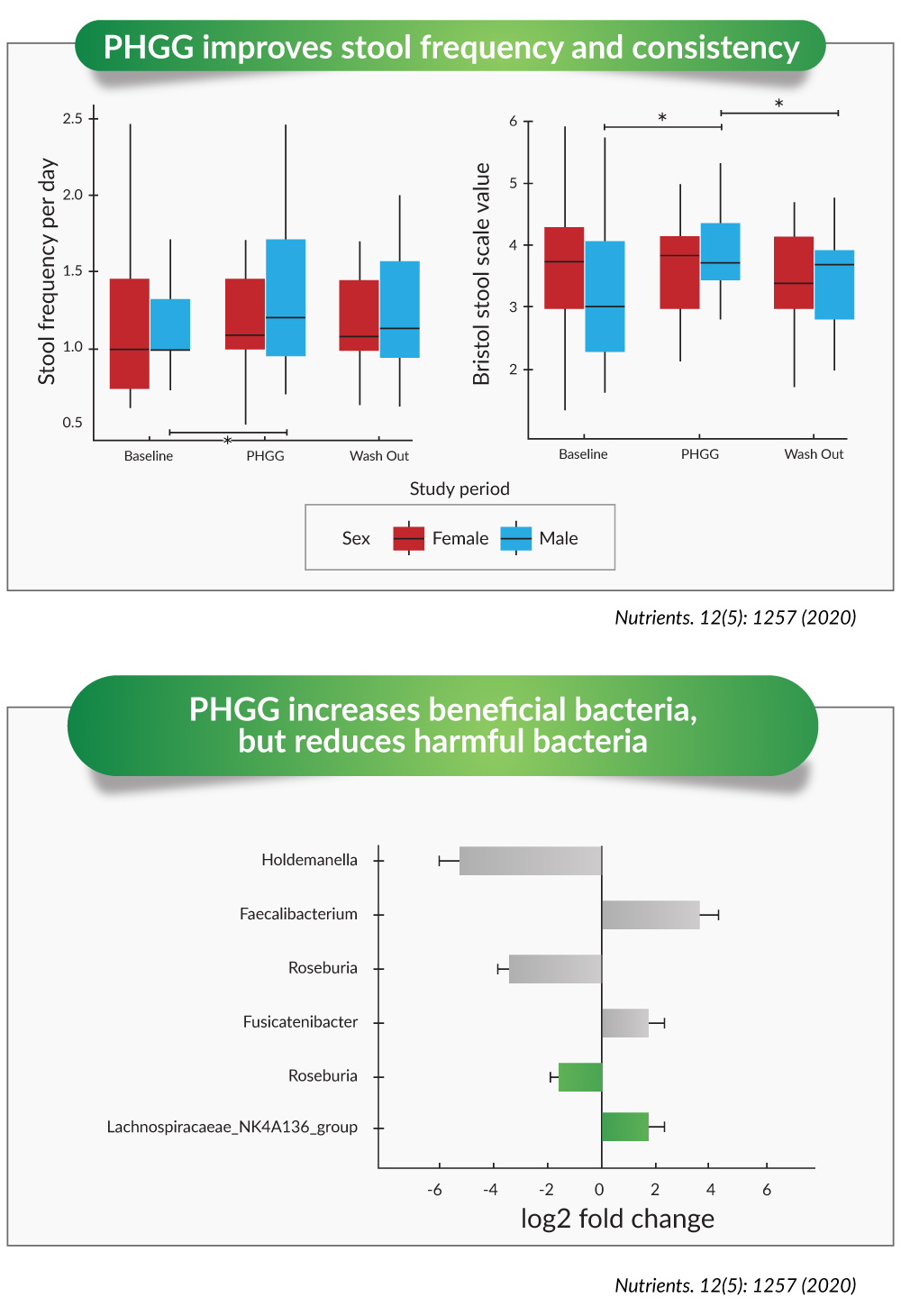
In this clinical trial, 20 healthy volunteers were orally administered 5 g PHGG up to 3 times a day, including a 3-week washout period. A stool diary was kept daily, while clinical data, along with serum/plasma and stool samples were collected on a weekly basis. Results showed that PHGG administration significantly improved stool frequency and consistency. In addition, it also improved diversity of gut flora and increases abundances of metabolites, including butyrate, acetate, and various amino acids. Furthermore, PHGG intake was associated with a bloom of beneficial bacteria Ruminococcus, Fusicatenibacter, Faecalibacterium and Bacteroides, and reduction of harmful bacteria Roseburia, Lachnospiracea and Blautia. After stopping the prebiotic, majority of the effects disappeared. These findings suggest the beneficial effects of PHGG in improving gut microbiota.
Study 3:
In this clinical trial, healthy volunteers were administered 21g Sunfiber™ daily, which was spread out as 7 g servings, 3 times a day for 2 weeks. After 2 weeks, both beneficial bacteria Bifidobacteria and Lactobacillus levels significantly increased compared to baseline. In addition, the stool pH decreases, indicating the production of beneficial short-chain fatty acids(SCFA).
Study 4:
In this clinical trial, constipated women were orally administered 11g Sunfiber™ twice per day for 3 weeks. After 3 weeks consumption, the Lactobacillus levels significantly increased and the participants reported significant relief of constipation, compared to control period.
Study 5:
In this clinical trial, 77 patients with small bowel intestinal overgrowth(SIBO) were orally administered standard antibiotic treatment or antibiotic plus 5g Sunfiber™ for 10 days. SIBO occurs when there is an abnormal increase in bacteria which are not commonly found in the digestive tract, resulting in gas, bloating and other discomforts. Results showed that the eradication rate of SIBO in the antibiotic group alone was 62.1%, while the eradication rate was 87.1% in the antibiotic plus Sunfiber™ group. This study
suggests that Sunfiber™ may be useful as an adjunct therapy for SIBO by increasing the efficacy of antibiotics, which is the first line of treatment for SIBO in eradicating SIBO (Aliment Pharmacol Ther. 32: 1000-1006 (2010)).
Study 6:
In this clinical trial, healthy female volunteers were orally administered 6g Sunfiber™ daily for 2 weeks and the composition of their gut microbiome was compared before and after Sunfiber™ supplementation. Sunfiber™ supplementation resulted in significant increase in Bifidobacterium levels, as well as butyrate (short-chain fatty acid)-producing bacteria. Compared to baseline, the Bifidobacteria levels remained significantly higher for 2 weeks after stopping Sunfiber™ supplementation, indicating its long-lasting benefits (Benef Microbes. 6(4):451-5 (2015)).
Study 7:
In this clinical trial, healthy adults with loose stools were orally administered 5g Sunfiber™ for 12 weeks. Compared to placebo group, Sunfiber™ supplementation resulted in significant increase in Bifidobacterium level and normalisation of stool form. These findings suggest that Sunfiber™ serves as a prebiotic fiber, as well as aiding in bowel regularity (Nutrients. 11(9)(2019)).
2) Immune health
PHGG is a prebiotic fiber derived from guar gum and contains glucomannan. Bacteria in the colon ferments glucomannan into short-chain fatty acids, which provide far-reaching benefits for gastrointestinal and immune health.
Study 1:
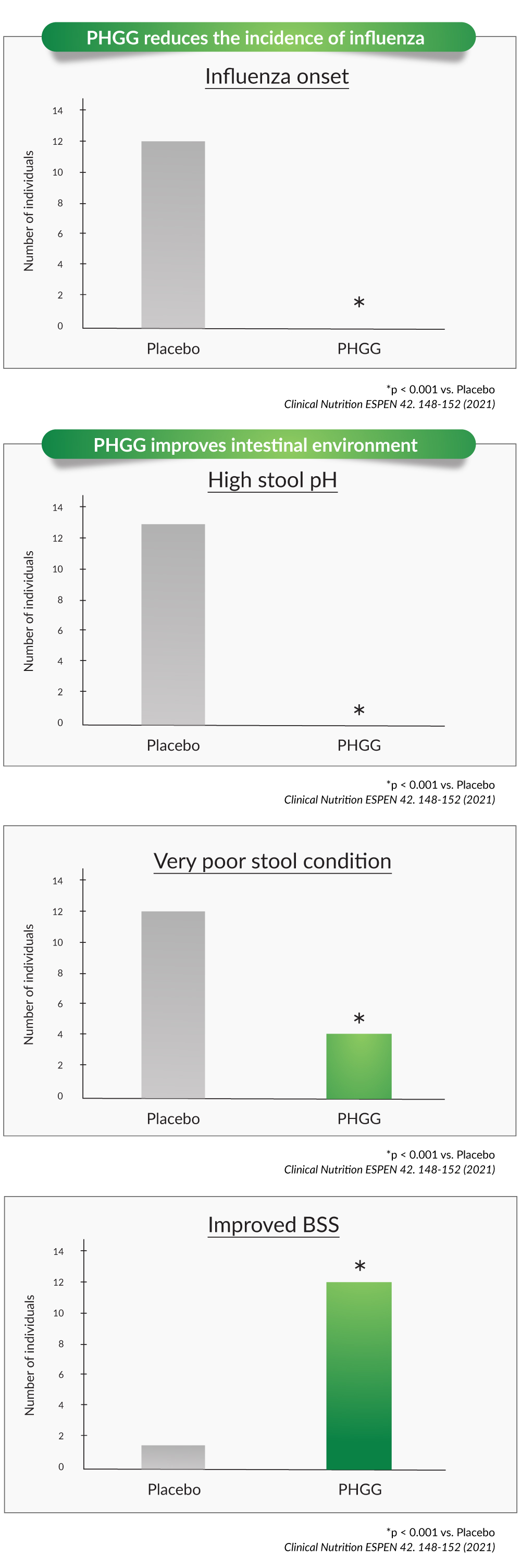
In this clinical trial, patients admitted to Hokusei Hospital were orally administered PHGG at 5.2 g/day at mealtimes, or placebo. After starting the PHGG administration for 2 months, incidence of influenza during hospitalisation, stool pH and Bristol Stool Form Scale (BSS) were compared between the two groups. Results showed that there was a significant difference (p < 0.001) in the incidence of influenza between PHGG and
placebo groups, with greater incidence of influenza in the placebo group. In addition, the placebo group had more patients with high stool pH, as well as with very poor BSS, which score 1 or 7. The average pH for a healthy person is in the range of 7.0 to 7.5. A high stool pH could be due to deficiency of beneficial bacteria, short-chain fatty acids and fiber. These findings suggest the beneficial effect of PHGG on the intestinal environment and immune health, which contributes to reducing the incidence of influenza.
3) Gastrointestinal tolerance of low FODMAP supplement
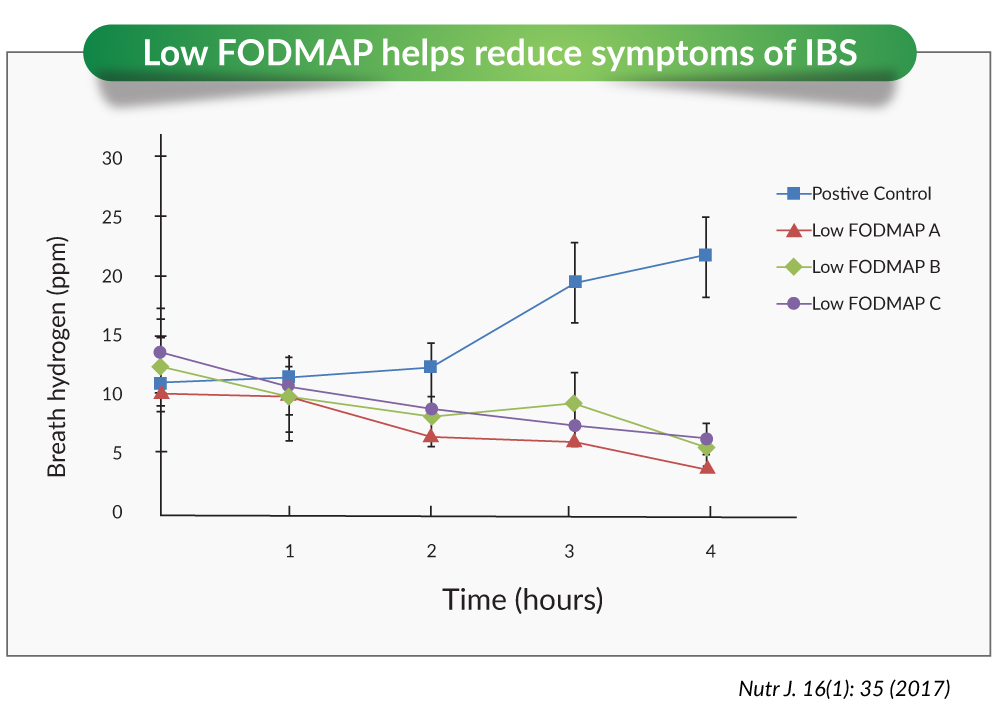
Irritable bowel syndrome (IBS) is commonly treated by adjusting the diet of IBS patients. Increasing the intake of dietary fiber and limiting the intake of FODMAP are the two frequent recommendations for IBS patients. As most fibers are high in FODMAP, this results in a limited number of suitable dietary fibers for IBS patients. Sunfiber™ is however different. This unique fiber, which is low in FODMAP and yet providing a rich source of dietary fiber, would be an ultimate choice for IBS patients. In this clinical trial, healthy adults (19 – 32 years old) were orally administered either one of 3 types of low FODMAP supplements, or positive control, which is 5g fructooligosaccharides (FOS) mixed in lactose-free milk. Following treatment consumption, breath hydrogen was measured at baseline, 1, 2, 3 and 4 hours. Hydrogen breath test is a test for lactose intolerance or bacterial overgrowth in small intestines. Compared to positive control, all three of the low FODMAP supplements resulted in lower breath hydrogen response at 3 and 4 hours after consumption. This indicates that low FODMAP formulas may be better tolerated in individuals with IBS.