







This offer ends in:




Scientifically proven health benefits of allulose:
Supports healthy blood glucose and insulin levels
The following are extracted from published clinical studies, in-house studies, and/or case studies and are for reference purposes only. This does not imply that the product from Lifestream Group Pte Ltd is claimed to replicate the same results produced in the studies. This information is not a substitute for professional medical advice, diagnosis, or treatment. If you have any questions about a medical condition, please consult your physician or other qualified healthcare providers. Any statements or claims made have not been evaluated by the relevant regulatory bodies and are not intended to diagnose, treat, cure, or prevent any disease.
By using the Site, you agree that you have read and acknowledge the above and the Terms of Use for this Site.
Hyperglycemia or high blood glucose occurs when the body does not produce sufficient insulin or body cells become resistant to the insulin. High blood glucose mainly affects those with diabetes, which could lead to serious complications if left untreated. Allulose, a rare sugar with 70% sweetness of regular sugar (sucrose) but with approximately 10% calorie, is an ideal sugar substitute to regular sugar to support healthy blood glucose and insulin levels.
Study 1: In this clinical trial, 30 participants without diabetes were orally administered a standard sucrose load (50 g) and randomised to placebo or escalating doses of allulose (2.5, 5.0, 7.5 and 10.0g). Their plasma glucose and insulin levels were measured before and at 30, 60, 90 and 120 minutes after ingestion. Compared to placebo, allulose administration was associated with a dose-dependent reduction of plasma glucose at 30 minutes, particularly glucose was significantly lower with 7.5 g and 10.0g allulose. Besides, there was significant lower insulin levels with 10.0g allulose, compared with placebo (p = 0.023). Notably, allulose resulted in a significant dose-dependent reduction in insulin excursion (deviation from normal) compared to placebo (p = 0.028), with significant reduction at 10.0g allulose. These findings suggest that allulose administration resulted in early dose-dependent reduction in plasma glucose and insulin levels, as well as reduced glucose and insulin excursion in non-diabetic subjects, supporting its anti-diabetes effects.

Study 2: Excess intake of regular sugar and high-fructose corn syrup (HFCS) is associated with increased risk of diabetes and obesity. In this study, rats were administered with water, rare sugar syrup containing allulose (RSS) and high-fructose corn syrup (HFCS) in drinking water for 10 weeks and then evaluated for glucose tolerance, insulin tolerance and liver glycogen content. Administration of RSS significantly suppressed weight gain and abdominal fat mass (p < 0.05). In glucose tolerance test, RSS showed significantly lower blood glucose levels from 90 to 180 min (p < 0.05), while there was a significantly higher blood glucose levels in the HFCS group compared to the water group. In insulin tolerance test, the levels of insulin in the RSS group were significantly lower than the water group at 30, 60 and 90 minutes (p < 0.05). The amount of liver glycogen was 3 times greater in the RSS group, compared to other groups. In the event of high blood glucose, excess glucose will be converted into glycogen for storage in the liver. These findings suggest RSS helps maintain glucose tolerance and insulin sensitivity, supporting healthy blood glucose levels.

Study 3: In this study, hyperglycemic and obese (OLETF) rats were fed 5% allulose dissolved in water or control (only water). Nondiabetic control (LETO) rats were taken as healthy control and fed water. Compard to control rats, allulose prevents the commencement and progression of type 2 diabetes till 60 weeks by maintaining blood glucose levels, managing postprandial (after meal) hyperglycemia, decreasing levels of HbA1c (average blood glucose levels for the last 2 to 3 months) and decreasing body weight gain, resultin in improvement in glycemic control. Besides, the plasma insulin were maintained and pancreatic beta-cells which produces insulin were preserved with significant reduction in inflammatory markers and body fat accumulation. These findings suggest that allulose has powerful antihyperglycemic and antihyperlipidemic effcts, which could be used as a replacement of regular sugar for those with diabetes and obesity.

Study 4: In a clinical trial, prediabetes and diabetes group administered with allulose (D-psicose) showed lower blood glucose levels after meals, compared to control. For healthy subjects, allulose (D-psicose) helps maintain normal blood glucose levels without posing the risk of hypoglycaemia.

Study 5: In this study, rats regularly given foods containing allulose (D-psicose) or a mixture of D-fructose and allulose (D-psicose) (psico-rare sugar; fructose:psicose = 3:1) showed remarkably lower blood glucose levels throughout the day, compared to control and foods containing D-fructose. This suggests allulose (D-psicose) or psico-rare sugar added to regular meals help control elevated blood sugar levels. Furthermore, there was no difference in the changes of blood glucose level between D-psicose and psico-rare sugar groups, in which the D-psicose intake in psico-rare sugar group was 1/4 that of the D-psicose group, implying that this effect was not due to a decrease in sugar intake.

Support healthy weight loss
Regular sugar is a source of empty calories and provides limited nutrients. Excessive consumption of food high in added sugar may cause fat gain quickly and drastically. Allulose is however different. This almost-zero calorie sugar can be consumed by obese/overweight individuals, which has beneficial effects on obesity-related metabolism.
Study 1: In this clinical study, 121 Korean subjects aged 20 to 40 years old with body mass index (BMI) ≥ 23 kg/m2 were randomly administered placebo control (0.012 g x 2 times daily sucralose), low-dose allulose (4g x 2 times daily allulose) and high-dose allulose (7g x 2 times daily allulose). Following allulose supplementation, body fat percentage and body fat mass were significantly decreased. Compared to placebo, group administered with high-dose allulose showed a significant decrease in body mass index (BMI), total abdominal and subcutaneous fat areas. These findings suggest the beneficial effects of allulose on overweight/obesity in a dose-dependent manner.

Study 2: In this study, 13 healthy men and women with mean age of 35.7 years old and BMI 20.9 kg/m2 were fasted overnight, which were then orally administered 5g of allulose or 10 mg of aspartame without any sugar as a control. After 30 minutes, they ingested a standardised meal and energy metabolism and blood glucose were analysed. Compared to control group, allulose-treated group showed significantly higher fat oxidation (p < 0.05), lower carbohydrate oxidation, lower blood glucose and higher free fatty acid levels. These findings suggest that allulose enhances postprandial (after meal) fat oxidation via enhanced energy metabolism. This makes allulose an ideal sweetener to manage and maintain healthy body weight.

Support cardiovascular health
Atherosclerosis is a disease in which plaque builds up inside arteries, resulting in hardening and narrowing of the blood vessels. Allulose (D-psicose) was found to suppress the secretion of Monocyte chemoattractant peptide-1 (MCP-1), an atherosclerosis promoter factor, from vascular endothelial cells that line heart and blood vessels, which promotes the development of early atherosclerotic lesions.

Support healthy liver
Fatty liver disease is a build-up of fat inside the liver which can affect liver function, cause liver damage and lead to severe complications over time. Among the risk factors of fatty liver includes obesity, high blood cholesterol and triglycerides, high alcohol intake and type 2 diabetes. Several studies suggested the benefits of allulose on the liver health.
Study 1: In this clinical trial, 90 subjects with high LDL (bad) cholesterol levels were administered high-dose allulose (15 g allulose/day), low-dose allulose (5 g allulose/day) or placebo (0 g allulose/day) and a daily test beverage for 48 weeks. Clinical examinations were conducted every eight weeks, starting from initial consumption until week 52. After long-term allulose consumption, there were significant improvements in liver enzyme activities, fatty liver score and glucose metabolism. These findings suggest the safety and efficacy of allulose in improving liver functions and glucose metabolism (Fundamental Toxicological Sciences. 7:1 (2020)).
Study 2: In this study, leptin-deficient obese mice were subchronic (repeats over a relatively short period) ingestion of allulose for 15 weeks. Allulose administration resulted in significant decrease in body and liver weights, loss of body weight and total fat mass, including abdominal visceral fat. Besides, allulose improved hepatic steatosis, which is a common condition caused by too much fat build-up in the liver. In the normal mice, single or long-term consumption of D-allulose does not influence these parameters. These findings suggest that dietary supplementation of allulose has beneficial effects on obesity-related hepatic steatosis, without exercise therapy or dietary restriction, making allulose a useful supplement for protecting against and improving obesity and obesity-related disorders.

Support healthy immune response
Study 1: Allergic reactions such as atopic dermatitis and nasal allergy can be controlled by suppressing abnormal T lymphocyte (immune cell) proliferation. The effect of allulose (D-psicose) on proliferation activities of T-lymphocytes was evaluated using the thymidine uptake. Allulose (D-psicose) was found to suppress T-lymphocyte proliferation by inhibiting thymidine uptake and thus, producing immunosuppressive and anti-allergic effects.

Study 2: Allulose (D-psicose) markedly inhibited growth, motility and reproductive maturity of parasites C. elegans larvae. In addition to D-psicose, tea polyphenols were found to have strong parasitic controlling effects. Anti-parasitic effects were higher when tea polyphenol compounds and allulose (D-psicose) were used in combination compared with the case of polyphenol alone. In view of the observed survival rates of C. elegans, tea polyphenol/D-psicose combinations had much stronger inhibitory effects than the anthelmintic drug Thiabendazole.


Supports healthy nervous system
Allulose (D-psicose) has been shown to protect neurons (nerve cells) from degeneration and death, implying the possible applications of this rare sugar in protecting against neurodegenerative diseases such as Alzheimer’s and Parkinson’s disease.
In this study, 200µM 6-hydroxydopamine (6-OHDA), which specifically destroys dopaminergic neurons and causes Parkinson’s disease, was added to rat cells. About 55% of the cells died due to toxicity of 6-OHDA. However, when allulose (D-psicose) was added at 50mM along with 6-OHDA, nearly 75% of the cells survived, indicating its cell-protecting effect.

Improve food properties
Allulose, which is a sweetener which tastes like sugar, but with only 10% calorie of regular sugar, is a great substitute for sugar in cakes, cookies and other baked goods. Compared to regular sugar, it browns more quickly and does not crystallise. On top of these, it provides health benefits, including antioxidant, regulation of blood glucose and lipid, as well as weight management, which are unachievable by the regular sugar.
Study 1: Sponge cake was baked with one portion (20%) of its sugar replaced with allulose (D-psicose) and allulose helped improve both antioxidant properties and colouring of the cake.

Study 2: Allulose (D-psicose) showed higher viscoelasticity when added to pudding compared to other sugars (sucrose, D-fructose). In addition, pudding containing allulose also showed higher 1,1-diphenyl-2-picrylhydrozyl (DPPH) radical scavenger activity, implying excellent antioxidant properties of D-psicose compared to sucrose and D-fructose.

Study 3: Good aroma and browning effect of baked foods are results of reaction between sugars and amino acids or proteins in foods. In this study, reaction between allulose (D-psicose) and phenylalanine (amino acid) was found to produce aromatic components in larger amounts than that using D-fructose. In addition, the reaction using allulose was also shown to progress more efficiently, resulting in more rapid and easier browning of foods.

Study 4: Surimi, a water-leached and cryo-stabilized ground fish muscle paste, is a raw material for making gelled seafood products, such as kamaboko and imitation shellfish. During freezing and frozen storage, surimi proteins denature, leading to significant quality deterioration of final gelled seafood products.
In this study, the quality of frozen surimi is determined by the elasticity of a gel formed by heating salted surimi paste. The breaking stress of every gel sample (without allulose) decreased after 1- and 2-months storage at -20oC. However, the breaking stress of the sample containing allulose (D-psicose) was significantly higher than control sample. Thus, allulose (D-psicose) was found to improve the elasticity of fish muscle proteins, suggesting the application of allulose as a cryoprotectant.

The breaking distortion also decreased with prolonged freezing. However, allulose (D-psicose) remarkably restrained the decreasing rate, implying that allulose is able to prevent the decline in the gel-forming ability of surimi during frozen storage.


Sugar Is Highly Addictive!
Sugar triggers a massive dopamine release in the brain's reward center, leading to a strong addiction. This can drive excessive sugar consumption and may have negative impacts on health.

Compromised Quality
Without proprietary technology, some allulose products may not meet the highest quality standards.
Questionable Source
Allulose products with unstated sources and research lack authenticity and reliability.
Unethical Practices
Some brands mix allulose with other sweeteners or fillers, even claiming it's 100% pure.


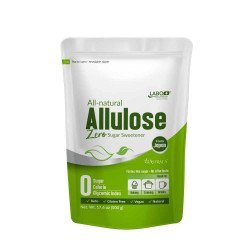
In collaboration with Kagawa University, Astraea is an allulose produced in Japan by Matsutani Chemical Industry Co. Ltd., a global pioneer and leader in rare sugars.

Backed by decades of research, Astraea Allulose is guaranteed to meet exceptionally high standards of quality, purity, and safety.

Supreme Quality
Astraea Allulose is research-proven to offer similar taste and texture to regular sugar but without the side effects.
Absolute Purity
In collaboration with Kagawa University, Astraea Allulose is produced by enzymatic conversion of fructose through a proprietary process.
Trusted Safety
Astraea Allulose is recognized as generally safe (GRAS) by the US Food and Drug Administration (FDA).

Natural Sweetener Without the Calories
Allulose is a natural sugar alternative that cannot be metabolized and converted into energy in the body. As a result, it has a glycemic index close to zero, causing no impact on blood glucose and insulin levels. This makes allulose an excellent alternative to regular sugar for sweetening, avoring, or seasoning, especially for individuals with blood glucose concerns, or those looking to manage obesity.